Can Toolbox Talks Reduce Workplace Accidents?
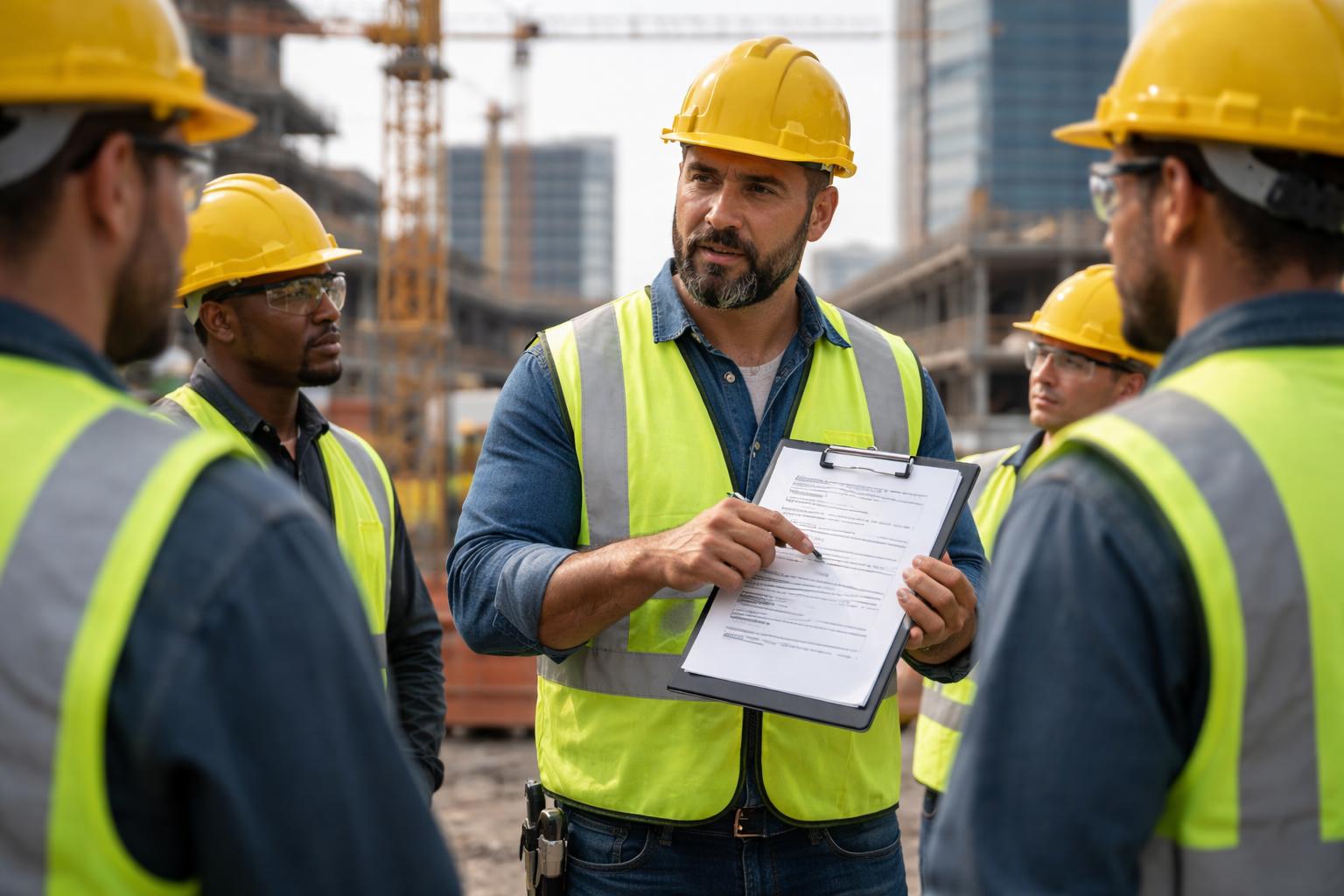
Every year, workplace accidents cost UK businesses £18 billion in lost productivity, medical costs, and legal fees. Many of these incidents share a common thread — they were preventable through better communication and awareness. This is where toolbox talks come in.
If you're responsible for workplace safety, you've likely wondered whether those short, informal safety discussions actually make a difference. The answer is yes, but only when they're done properly and as part of a broader safety management system.
What the Research Shows
The Health and Safety Executive's research consistently shows that organisations with effective safety communication have significantly lower accident rates. Companies that conduct regular toolbox talks report 25-40% fewer workplace incidents compared to those that don't.
The most compelling evidence comes from construction — historically one of the UK's most dangerous industries. Sites that implement structured toolbox talk programmes see measurable reductions in:
Slips, trips and falls — the most common cause of workplace injury
manual handling injuries — affecting 470,000 workers annually
Contact with moving machinery — responsible for 5,000 injuries per year
Struck by falling objects — causing 1,100 serious injuries annually
But here's the key: toolbox talks work because they address the human factors behind most accidents. HSE analysis shows that 80% of workplace incidents involve some form of human error — not mechanical failure or equipment defects.
Why Toolbox Talks Are Effective
Toolbox talks reduce accidents through several proven mechanisms:
They Keep Safety Visible
Regular safety discussions prevent what psychologists call "risk normalisation" — the gradual acceptance of hazardous conditions as normal. When workers discuss safety weekly, they maintain awareness of risks that might otherwise become invisible.
They Address Immediate Hazards
Unlike formal training courses delivered months apart, toolbox talks can respond to current conditions. If there's ice on walkways, wet floors, or new equipment on site, you can address it immediately rather than waiting for the next training session.
They Encourage Reporting
Workers who participate in regular safety discussions are more likely to report near misses and hazards. This early warning system prevents minor issues from becoming major incidents.
They Build Safety Culture
Perhaps most importantly, consistent toolbox talks demonstrate that management takes safety seriously. This cultural shift influences behaviour even when supervisors aren't present.
The Legal Framework
Under the Management of Health and Safety at Work Regulations 1999, you have a duty to provide your employees with "comprehensible and relevant" health and safety information. Regulation 10 specifically requires employers to provide information about:
Risks identified by risk assessment
Preventive and protective measures
Emergency procedures
The identities of competent persons
Toolbox talks are an excellent way to meet these duties, particularly for communicating the 5 steps to risk assessment findings to your workforce.
The Health and Safety at Work etc. Act 1974 goes further, requiring employers to provide "such information, instruction, training and supervision as is necessary to ensure, so far as is reasonably practicable, the health and safety at work of employees."
Courts have consistently held that one-off induction training isn't sufficient. Safety communication must be ongoing, relevant, and adapted to changing workplace conditions.
What Makes Toolbox Talks Effective
Not all toolbox talks reduce accidents. Generic, poorly delivered talks can actually increase complacency. Here's what makes the difference:
Relevance to Current Work
The most effective toolbox talks address hazards workers will encounter that day or week. Discussing safe lifting techniques is pointless if your team isn't doing manual handling work.
Two-Way Communication
Lecturing doesn't change behaviour. Effective toolbox talks encourage questions, share experiences, and invite workers to identify hazards they've noticed.
Specific, Actionable Content
Instead of "be careful," effective talks provide specific guidance: "Check the weight before lifting," "Test the stability of ladders," "Report any damaged PPE immediately."
Regular Delivery
Weekly toolbox talks are more effective than monthly ones. Daily talks work well for high-risk activities or changing work sites.
Management Commitment
When supervisors and managers participate actively rather than just going through the motions, workers take the content seriously.
Industry-Specific Evidence
Construction
The Construction Industry Training Board found that sites conducting weekly toolbox talks had 31% fewer RIDDOR reportable incidents. The talks were most effective when they addressed work at height regulations and current weather conditions.
Manufacturing
A study of UK manufacturing sites showed that facilities with structured toolbox talk programmes reduced lost-time injuries by 28%. The biggest improvements were in incidents involving work equipment covered by PUWER.
Healthcare
NHS trusts implementing regular safety huddles (their version of toolbox talks) reduced patient handling injuries by 35%. The discussions focused heavily on patient handling regulations and proper equipment use.
The Limits of Toolbox Talks
While effective, toolbox talks aren't a complete safety solution. They work best as part of a comprehensive safety management system that includes:
Proper risk assessment — you can't talk about hazards you haven't identified
Adequate training — talks reinforce formal training but don't replace it
Safe systems of work — procedures must exist before you can discuss them
Management commitment — talks without follow-up action become meaningless
Toolbox talks also can't compensate for fundamental safety failures like inadequate PPE, poorly maintained equipment, or unrealistic time pressures.
Measuring Effectiveness
To determine whether your toolbox talks are reducing accidents, track:
Incident rates — both RIDDOR reportable and minor injuries
Near miss reporting — should increase as safety awareness grows
Attendance rates — consistent participation indicates engagement
Worker feedback — are they finding the talks useful and relevant?
Remember that accident reduction isn't immediate. Cultural change takes time, and you may see increased reporting initially as workers become more aware of hazards and comfortable reporting them.
Common Mistakes That Reduce Effectiveness
Many organisations undermine their toolbox talks by:
Using generic content — discussing office safety with construction workers
Poor timing — rushing through talks when workers are eager to start
Lack of preparation — reading from scripts without understanding the content
No follow-up — ignoring issues raised during discussions
Inconsistent delivery — skipping talks when work is busy
The Cost-Benefit Reality
Toolbox talks require investment — primarily in time. A weekly 15-minute talk for a team of 10 workers costs roughly £50-75 in labour time (including preparation).
Compare this to the average cost of a workplace accident: £8,500 for a minor injury, £74,000 for a major injury, and £1.8 million for a fatality (HSE figures). Even preventing one minor incident per year provides a significant return on investment.
More importantly, your duty as an employer isn't just about avoiding costs — it's about protecting people. The human cost of workplace accidents can't be calculated in pounds and pence.
What to Do Now
If you want to use toolbox talks to reduce workplace accidents:
Start with proper risk assessment to identify your main hazards
Develop talks that address your specific workplace risks and current activities
Train supervisors to deliver talks effectively — it's a skill, not just reading from notes
Schedule regular talks and stick to the schedule even when busy
Encourage questions and act on issues raised by workers
Track attendance, engagement, and safety performance to measure effectiveness
For practical guidance on running effective talks, see our comprehensive toolbox talks guide with ready-to-use topics and delivery techniques.
Remember: toolbox talks are most effective when they're part of a broader commitment to workplace safety. They won't fix fundamental safety management failures, but they can significantly reduce accidents when implemented properly alongside other safety measures.
Need Help?
Implementing an effective toolbox talk programme requires understanding your specific workplace hazards and legal duties. If you need help identifying risks or developing relevant safety communications for your business, get in touch. We can help you create a tailored approach that actually reduces accidents rather than just ticking compliance boxes.
Browse our full library of 100 ready-to-use toolbox talks — editable Word format, attendance register included, aligned with UK health and safety legislation. From £3.99.