Fire Safety in Care Homes - Complete Compliance Guide
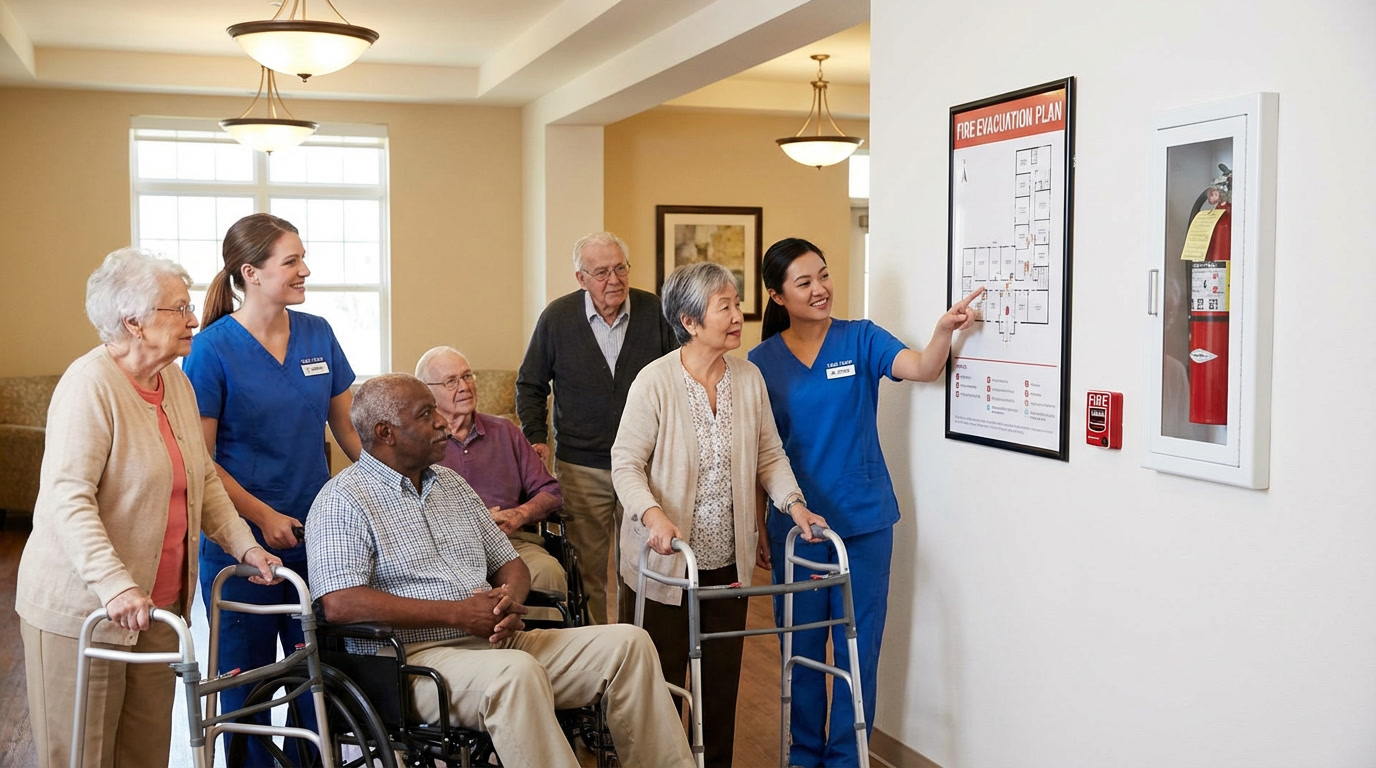
Care homes face unique fire safety challenges. With residents who may have mobility issues, cognitive impairments, or require assistance to evacuate, getting fire safety wrong can be fatal. The regulations are strict, the penalties are severe, and the human cost of non-compliance is devastating.
If you run a care home, manage one, or are designated as the responsible person, you have extensive legal duties under the Regulatory Reform (Fire Safety) Order 2005. This isn't just about having fire extinguishers and smoke alarms — it's about comprehensive fire risk management designed to protect vulnerable people.
Who Has Fire Safety Duties in Care Homes?
Under the Fire Safety Order 2005, the responsible person is legally accountable for fire safety. In most care homes, this is:
The owner or proprietor — if they have direct control of the premises
The registered manager — where appointed under the Care Quality Commission registration
The management company — in corporate ownership structures
The responsible person cannot delegate their legal liability, though they can appoint competent people to help fulfil their duties. If multiple organisations are involved (such as separate building owners and care operators), duties may be shared, but each party remains fully liable for their areas of control.
For a complete explanation of who can be held responsible, see our guide to what is a responsible person under the Fire Safety Order.
What the Law Requires
The Fire Safety Order 2005 places specific duties on care home operators. You must:
Conduct a suitable and sufficient fire risk assessment — reviewing all fire hazards, people at risk, and existing control measures
Implement appropriate fire safety measures — based on the risk assessment findings
Maintain fire safety equipment and systems — ensuring everything works when needed
Provide fire safety training for all staff — so they know how to respond in an emergency
Plan for emergency evacuation — accounting for residents who cannot evacuate independently
Keep detailed records — documenting your fire safety arrangements and maintenance
These duties are ongoing. Fire safety isn't a one-time compliance exercise — it requires continuous management and regular review.
Fire Risk Assessment Requirements
Every care home must have a suitable and sufficient fire risk assessment. This is a legal requirement, not an option. The assessment must:
Identify fire hazards — anything that could cause or spread fire
Identify people at risk — residents, staff, visitors, and contractors
Evaluate existing fire safety measures — what's already in place and how effective it is
Determine additional measures needed — what more must be done to ensure safety
Record significant findings — documenting the assessment and action plan
For care homes, the fire risk assessment must pay particular attention to:
Evacuation capabilities of residents — mobility limitations, cognitive impairment, medication effects
Staffing levels — especially during night shifts when fewer staff are available to assist
Building layout and construction — compartmentation, escape routes, and fire-resistant construction
Emergency evacuation procedures — including progressive horizontal evacuation strategies
Given the complexity of care home fire risks, most operators commission a qualified fire risk assessor rather than attempting to do this themselves. Our guide explains whether you need a fire risk assessment and what's involved.
Personal Emergency Evacuation Plans (PEEPs)
Each resident who cannot evacuate independently must have a Personal Emergency Evacuation Plan (PEEP). This documents:
The resident's mobility and cognitive abilities — what assistance they need
Evacuation method — how they'll be moved to safety
Staff requirements — how many people needed and what equipment
Safe waiting areas — where residents will wait if immediate evacuation isn't possible
PEEPs must be reviewed regularly as residents' abilities may change. For detailed guidance, see our article on Personal Emergency Evacuation Plans.
Evacuation Strategies for Care Homes
Most care homes cannot use simultaneous evacuation — getting everyone out at once — because many residents need assistance. Instead, they typically use:
Progressive Horizontal Evacuation
This involves moving residents away from immediate danger to a safe area on the same floor, rather than evacuating the entire building immediately. It works by:
Compartmentalising the building — using fire-resistant walls and doors to create safe areas
Moving residents horizontally first — to the safest compartment on the same floor
Only using stairs when safe to do so — and only for residents who can manage them
Relying on the fire service — for final evacuation if needed
This strategy recognises that moving mobility-impaired residents down stairs during a fire may be more dangerous than keeping them in a properly protected area.
Stay Put Strategies
In some purpose-built care homes with excellent compartmentation, a 'stay put' policy may be appropriate. This means residents remain in their rooms (if safe to do so) while the fire service deals with the incident.
However, stay put strategies require:
Excellent fire-resistant construction — typically 60 minutes fire resistance between compartments
Effective detection and alarm systems — to alert staff immediately
Sprinkler protection — to control or suppress fires
Detailed staff procedures — for assessing and responding to each incident
For more on different approaches, read our guide to evacuation strategies.
Fire Safety Equipment and Systems
Care homes typically need comprehensive fire safety systems due to the high risk to life. Common requirements include:
Fire Detection and Alarm Systems
Most care homes need an automatic fire detection system (Category L2 or L1) that covers:
All bedrooms and sleeping areas — where fires are most dangerous at night
All common areas and corridors — to detect fires in circulation spaces
Service rooms and kitchens — where fires commonly start
Roof spaces and voids — where fires can spread undetected
The system must provide early warning to staff, even during night hours when occupancy is at its lowest. For guidance on whether you need a fire alarm system, see do I need a fire alarm system?
Emergency Lighting
Care homes must have emergency lighting on all escape routes and in areas where residents may need assistance. This ensures safe evacuation even during power failures.
Fire Extinguishers
Appropriate fire extinguisher types must be provided, though in care homes these are primarily for staff use. Residents should not be expected to fight fires — they should focus on evacuation or moving to safety.
Fire Doors
Fire doors are critical in care homes for compartmentation and protecting escape routes. They must:
Close automatically — using self-closers or automatic systems
Be kept clear — not wedged open or obstructed
Maintain their fire rating — through proper maintenance and inspection
Have appropriate hardware — handles, locks, and vision panels suitable for the users
Some fire doors in care homes may need to remain open for operational reasons (such as assisting residents with mobility aids). In these cases, automatic closing systems triggered by the fire alarm are typically required.
Staff Training Requirements
All care home staff must receive fire safety training appropriate to their role. This isn't just induction training — it must be ongoing and regularly refreshed.
General Staff Training
All staff must know:
How to raise the alarm — what to do if they discover a fire
Evacuation procedures — including their specific roles and responsibilities
Location of fire safety equipment — and basic operation where relevant
Assembly points and roll call procedures — ensuring everyone is accounted for
Fire Warden Training
Care homes should designate fire wardens — usually senior staff members — who receive additional training on:
Incident management — taking control during fire emergencies
Equipment use — proper operation of fire extinguishers and other systems
Evacuation coordination — managing the safe movement of residents
Communication with emergency services — providing clear information to responding teams
Regular fire drills
Care homes must conduct regular fire drills, but these need careful planning. Unlike office buildings where everyone simply walks out, care home drills must:
Practice realistic scenarios — testing different times, staffing levels, and building areas
Involve residents appropriately — without causing distress or confusion
Test staff response times — ensuring evacuation assistance can be provided quickly enough
Identify problems and solutions — continuous improvement based on drill outcomes
Maintenance and Record Keeping
Fire safety systems require regular maintenance and testing. Care homes must maintain detailed records of:
Weekly fire alarm tests — testing different call points each week
Monthly emergency lighting tests — brief functional test of all fittings
Fire door inspections — checking self-closers, seals, and general condition
Fire extinguisher checks — monthly visual inspections and annual servicing
Staff training records — documenting who has been trained and when
Fire drill records — noting what was practiced and any issues identified
These records must be available for inspection by the fire authority and form part of your evidence that you're meeting your legal duties.
Specific Hazards in Care Homes
Care homes present particular fire risks that must be carefully managed:
Smoking Materials
Many care homes are now smoke-free, but where smoking is permitted:
Designated smoking areas only — with proper ventilation and fire-resistant furnishing
Supervised smoking policies — especially for residents with cognitive impairment
Safe disposal arrangements — proper ashtrays and disposal methods
Risk assessments for individual residents — considering their capabilities and supervision needs
Medical Equipment
Electrical medical equipment, mobility aids, and charging devices present ignition sources. Consider:
Regular electrical testing — PAT testing of all portable equipment
Safe charging practices — designated areas for charging mobility scooters and hoists
Heat-producing equipment — proper ventilation and clearances around devices
Oxygen storage and use — specialist fire safety measures where oxygen is used therapeutically
Kitchen and Laundry Areas
Commercial kitchens and laundries are high-risk areas requiring:
Automatic suppression systems — for commercial cooking equipment
Proper maintenance of extraction systems — regular cleaning to prevent grease fires
Heat-producing equipment protocols — safe operation and shutdown procedures
Separation from resident areas — appropriate fire-resistant construction
Regulatory Oversight and Inspections
Care homes are subject to inspection by multiple authorities:
Fire and Rescue Service
The local fire and rescue authority enforces the Fire Safety Order 2005. They have powers to:
Inspect premises at any reasonable time — often without advance notice
Issue enforcement notices — requiring specific improvements by set deadlines
Issue prohibition notices — stopping use of all or part of the premises
Prosecute for serious breaches — with unlimited fines and potential imprisonment
Fire authorities take care home safety very seriously due to the high risk to vulnerable people.
Care Quality Commission (CQC)
The CQC regulates care homes and includes fire safety in their inspection regime. They expect to see:
Comprehensive fire risk assessments — appropriate to the specific risks
Effective evacuation procedures — tested and regularly reviewed
Competent staff — properly trained in fire safety procedures
Well-maintained systems — with clear records of testing and maintenance
CQC ratings can be affected by fire safety deficiencies, impacting the home's reputation and viability.
Consequences of Non-Compliance
The penalties for fire safety failures in care homes are severe, reflecting the serious risk to vulnerable people.
Criminal Penalties
Under the Fire Safety Order 2005, breaches can result in:
Unlimited fines — in the Crown Court for serious offences
Up to two years imprisonment — for the responsible person
Corporate liability — companies and their directors can be prosecuted
Prohibition from operating — premises can be closed immediately if there's serious risk
The courts take a particularly serious view of fire safety failures that put vulnerable people at risk.
Civil Liability
Fire safety failures can also result in:
Civil claims for damages — from residents, families, or staff affected by fire incidents
Insurance coverage issues — insurers may refuse claims if legal requirements weren't met
Regulatory action by CQC — including conditions on registration or closure
Reputational Damage
Fire safety prosecutions attract significant media attention and can permanently damage a care home's reputation, making it difficult to maintain occupancy levels or recruit quality staff.
When You Need Professional Help
Care home fire safety is complex and high-risk. While this guide explains your legal obligations, most care homes require professional support to ensure compliance:
Fire Risk Assessment
Given the complexity of care home risks and evacuation challenges, you should commission a qualified fire risk assessor with specific experience in care environments. They understand:
Care home-specific regulations — how the Fire Safety Order applies to residential care
Evacuation planning for vulnerable people — realistic strategies for different resident groups
Building regulations compliance — how structural fire safety measures interact with operational needs
Interface with other regulations — CQC requirements, building control, and health and safety
Fire Safety System Design
Fire alarm systems, emergency lighting, and suppression systems should be designed by qualified fire safety engineers who understand the specific needs of care environments.
Staff Training
While basic fire safety awareness can be delivered in-house, consider professional fire safety training providers for:
Fire warden training — for designated fire safety coordinators
Evacuation assistance training — safe techniques for helping residents
Incident management — coordinating with emergency services
The cost of professional support is minimal compared to the potential consequences of getting fire safety wrong in a care environment.
Next Steps for Care Home Operators
If you operate a care home, take these immediate steps:
Commission a comprehensive fire risk assessment — by a qualified assessor with care home experience
Review your evacuation procedures — ensure they're realistic for your resident group and staffing levels
Check your fire safety training records — all staff should have current, role-appropriate training
Test your fire safety systems — ensure alarms, emergency lighting, and fire doors are working correctly
Update your PEEPs — review evacuation plans for all residents who need assistance
Schedule regular fire drills — practice your procedures at different times and with different scenarios
Fire safety in care homes isn't just about legal compliance — it's about protecting some of society's most vulnerable people. The regulations exist because residential care fires have historically resulted in multiple fatalities. Don't wait for an incident or inspection to prioritise fire safety.
For broader guidance on fire safety compliance, see our complete fire safety compliance guide. Your residents, staff, and families depend on you getting this right.
For regular staff refreshers, the Healthcare & Care Homes Toolbox Talk Bundle (£34.99) provides ready-to-deliver briefings on fire safety, manual handling, COSHH, and other key topics — complete with attendance registers for CQC evidence.